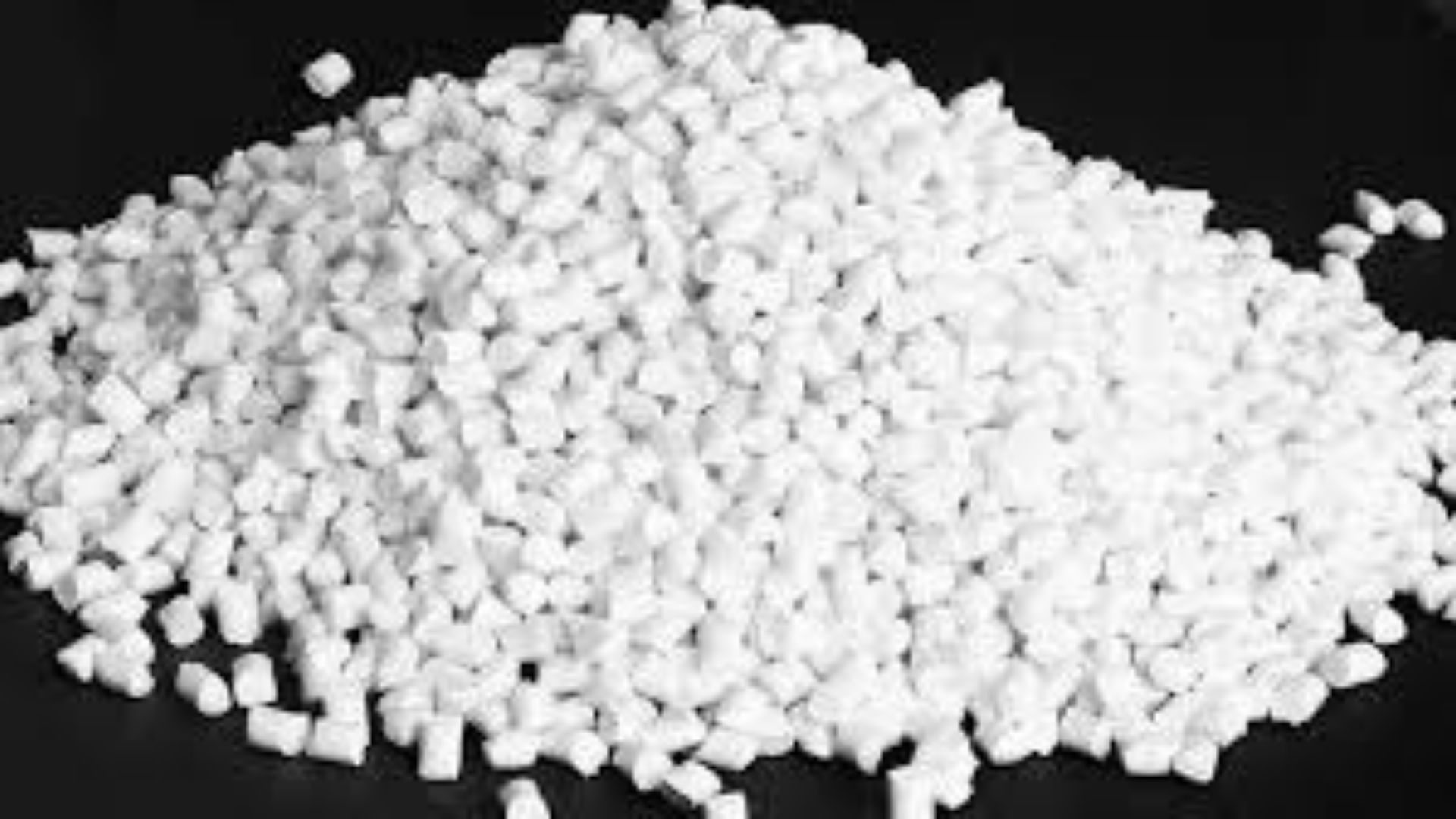
Thermoforming is widely used to manufacture food containers, trays, cups, packaging components, household products, and industrial parts from thermoplastic sheets. In this process, material formulation has a direct impact on sheet extrusion, heating behavior, forming stability, and the mechanical properties of the finished product, for manufacturers working with Polypropylene (PP), Polyethylene (PE), and other thermoplastics, filler masterbatch for thermoforming is commonly introduced into the formulation to modify material properties while controlling resin consumption.
This article by CVN PLASTICS explains how filler masterbatch for thermoforming works, how it influences processing and product properties, and which parameters should be considered when selecting a suitable formulation.
What Is Filler Masterbatch In Thermoforming?
Filler masterbatch is a concentrated compound containing a high proportion of mineral filler dispersed in a polymer carrier. Calcium carbonate, or CaCO3, is the most common mineral used in filler masterbatch because of its availability, relatively stable physical properties, and compatibility with many thermoplastic processing systems.

In thermoforming production, filler masterbatch for thermoforming is normally blended with virgin resin or recycled polymer before sheet extrusion. The resulting sheet is subsequently heated until it reaches an appropriate forming temperature and is shaped against or into a mold using vacuum, pressure, or mechanical force.
The filler does not simply replace part of the polymer. It changes the physical and rheological characteristics of the material system. Depending on formulation and dosage, these changes can affect stiffness, shrinkage, opacity, thermal response, sheet dimensional stability, and processing behavior.
Composition Of Filler Masterbatch
A typical calcium carbonate filler masterbatch consists of three main components: mineral filler, polymer carrier, and processing additives. Calcium carbonate usually represents the largest portion of the formulation. Its particle size, particle-size distribution, purity, shape, and surface treatment strongly affect dispersion and interaction with the polymer matrix.
The carrier resin allows the mineral particles to be introduced into the base polymer in pellet form. PE and PP carriers are commonly used, although the exact carrier should be selected according to the target resin and processing conditions.
The properties of filler masterbatch for thermoforming, therefore, cannot be evaluated only by looking at CaCO3 content. Two masterbatches with similar mineral percentages may perform differently because their mineral characteristics, carrier system, and dispersion quality are different.
How Filler Masterbatch Works In Thermoforming Materials
When filler masterbatch is mixed with the base polymer, calcium carbonate particles become distributed throughout the polymer matrix. These particles act as an inorganic phase within the thermoplastic material. Because mineral particles are significantly more rigid than the polymer phase, adding them generally increases the modulus of the compound. This can result in a stiffer sheet and a more rigid thermoformed part.
Mineral addition can also alter thermal conductivity and heat distribution. During thermoforming, these factors are important because the sheet must absorb heat sufficiently and uniformly before forming. At the same time, excessive mineral content or poor dispersion may reduce elongation and impact resistance. The effect of filler masterbatch for thermoforming, therefore, depends on finding an appropriate balance between filler loading, processing stability, and the required properties of the finished article.
Common Resins Used For Thermoforming
Several thermoplastics can be processed by thermoforming, with PP being particularly common in rigid packaging and disposable products. PP offers relatively low density, good stiffness, chemical resistance and suitability for food-contact applications when compliant grades are used. PP-based thermoforming is frequently used for trays, cups, tubs, and food containers.
PP may also be thermoformed, particularly when flexibility and impact resistance are important. HDPE provides greater rigidity than LDPE and can be used for industrial trays, liners and other formed products.
Polystyrene (PS) has historically been used extensively in thermoformed packaging because of its rigidity and relatively easy processing. Other materials such as PET, ABS, and specialized multilayer structures are also thermoformed, although mineral-filled formulations must be evaluated carefully for each polymer system.
For this reason, filler masterbatch for thermoforming should be selected according to the chemistry and processing behavior of the base material rather than treated as a universal additive.
Why Is Filler Masterbatch Used In Thermoforming?
Mineral filler is incorporated into thermoforming formulations for both economic and technical reasons. While reducing polymer consumption is often an important consideration, Calcium carbonate can also modify stiffness, dimensional behavior, and processing characteristics.
The final effect depends greatly on the application. A thin disposable tray, for example, has different requirements from a thick industrial thermoformed component. Appropriate filler loading must therefore be determined according to product geometry, resin type, and expected mechanical performance.
Reducing Raw Material Costs
Virgin polymers such as PP and PE represent a significant proportion of the material cost in thermoforming production. Replacing part of the polymer phase with calcium carbonate can reduce the quantity of virgin resin required per kilogram of compound.
The economic result, however, should not be calculated simply from the price difference between resin and masterbatch. Mineral addition increases material density, which means the relationship between product weight, volume and cost must be considered.
Improving Material Stiffness And Dimensional Stability
Calcium carbonate is a rigid mineral. When properly dispersed in a thermoplastic matrix, it generally increases flexural modulus and reduces the flexibility of the material. Higher stiffness can be useful in thermoformed trays, cups and containers that need to retain their shape during stacking, filling or handling. Mineral filler may also reduce polymer shrinkage because the inorganic phase undergoes considerably less dimensional change than the surrounding polymer. This can help improve dimensional consistency after cooling.
However, greater stiffness is usually accompanied by a reduction in ductility if the loading becomes too high. The formulation must therefore provide sufficient rigidity without making the finished product excessively brittle.
Enhancing Processing Performance
A correctly formulated filler masterbatch for thermoforming can influence melt behavior during sheet extrusion and subsequent thermoforming. Calcium carbonate may improve the dimensional stability of the extruded sheet and reduce certain types of polymer shrinkage. Its presence can also affect melt viscosity, depending on particle size, loading, surface treatment, and the rheology of the carrier resin. These effects mean that heater settings, sheet temperature, forming time or cooling conditions may need adjustment after changing the filler percentage.
Improving Surface Appearance And Opacity
Fine Calcium carbonate particles can increase the opacity of plastic sheets by changing the way light passes through the polymer matrix. This property is useful in products where translucency is undesirable, including many disposable trays, plates and rigid packaging components.
Mineral filler can also influence surface texture and gloss. The exact effect depends strongly on particle size, dispersion and processing conditions. Fine, uniformly dispersed CaCO3 generally produces a more consistent appearance than coarse or poorly dispersed material.
For applications requiring specific optical properties, manufacturers should evaluate the final thermoformed sheet rather than relying solely on the visual appearance of the filler masterbatch pellets.
How Filler Masterbatch Affects The Thermoforming Process
Thermoforming consists of several interconnected processing stages. Raw material is first compounded or blended, melted and extruded into sheet. The sheet is then reheated, stretched into the mold, cooled and trimmed. Because mineral filler changes both melt and solid-state properties, filler masterbatch for thermoforming can influence each of these stages.
Impact On Sheet Extrusion
Sheet quality is fundamental to successful thermoforming. Variations in thickness, dispersion or melt flow can become more pronounced after the sheet is stretched during forming. Calcium carbonate increases the solid content of the formulation and can affect melt viscosity. If the masterbatch is well dispersed and compatible with the polymer, stable sheet extrusion can generally be maintained within an appropriate loading range.
Poor dispersion, however, can produce agglomerates that appear as surface defects or weak points in thin sheets. Large mineral particles may also create localized stress concentrations. Extrusion temperature, screw design, mixing efficiency, and filtration should therefore be appropriate for the mineral-filled formulation.
Effect On Heating And Forming Behavior
Before forming, a thermoplastic sheet must be heated to a temperature range where it becomes sufficiently soft and extensible without losing structural control. The presence of Calcium carbonate modifies the thermal characteristics of the sheet. Mineral particles conduct heat differently from the polymer phase and can influence both heating rate and temperature distribution.
At moderate filler levels, the process may remain close to that used for virgin resin. At higher loadings, however, the heating profile often requires optimization. Because filled materials can have lower elongation than neat polymer, excessive stretching should be avoided in applications with deep draws or highly complex geometries. Filler masterbatch for thermoforming is therefore particularly dependent on matching material formulation with part design.
Effect Of Trimming And Finished Product Quality
After forming, thermoformed products are normally trimmed to separate the finished component from the surrounding sheet. Higher mineral loading increases stiffness but can also decrease ductility. This changes the way the material behaves during cutting, punching or die trimming.
If the filler level is too high, edges may become more susceptible to cracking or chipping. Poorly dispersed filler can further increase this risk by producing localized weak points. A suitable filler masterbatch for thermoforming should therefore provide consistent particle dispersion and sufficient compatibility to maintain acceptable edge quality after trimming.
Key Properties Of Filler Masterbatch For Thermoforming
Selecting filler masterbatch based only on price or CaCO3 percentage can result in inconsistent processing. Several physical and formulation parameters should be assessed together because they determine how the masterbatch behaves during extrusion and thermoforming.
Calcium Carbonate Particle Size
Particle size is one of the most important characteristics of calcium carbonate used in plastic compounds. Fine particles generally disperse more uniformly and create smaller stress concentrations within the polymer matrix. This is particularly important for thin sheets and products that experience significant stretching during forming.
Coarser particles may reduce material cost but can negatively affect surface quality and mechanical performance when the particle size is inappropriate for the application. Particle-size distribution is also important. A consistent distribution helps maintain predictable processing and finished-product properties.
CaCO3 Content And Filler Loading
Masterbatch concentration and actual addition rate are two different parameters. For example, a masterbatch may contain a high percentage of CaCO3, but the final mineral content in the finished compound depends on how much masterbatch is blended with the base resin. If a formulation contains 20% filler masterbatch, the final CaCO3 concentration will be lower than 20% because part of the masterbatch itself consists of carrier resin and additives.
When evaluating filler masterbatch for thermoforming, manufacturers should therefore calculate the actual mineral content in the final formulation rather than considering only the masterbatch addition percentage. Increasing loading generally increases stiffness and density while reducing polymer content. At sufficiently high loading, however, impact strength, elongation and forming performance may decline.
Dispersion Quality
Uniform dispersion is essential in thermoforming because the extruded sheet is subsequently stretched. Agglomerated CaCO3 particles can create visible defects, non-uniform surfaces and mechanical weak points. During deep forming, these defects can become more critical as the sheet becomes thinner.
Dispersion depends on mineral surface treatment, particle size, carrier resin, masterbatch compounding technology and subsequent mixing conditions at the thermoforming plant. A well-dispersed filler system is particularly important for thin-wall packaging, where minor inconsistencies may affect both appearance and mechanical performance.
Moisture Content
Excess moisture can cause processing problems during extrusion, including bubbles, voids and surface defects. Although calcium carbonate itself is not highly hygroscopic compared with some other fillers, filler masterbatch should still be stored under appropriate dry conditions. Moisture may be introduced through storage, packaging damage or environmental exposure. Stable moisture control helps maintain consistent sheet quality and reduces the risk of defects during processing.
Compatibility With The Base Polymer
The carrier resin in filler masterbatch for thermoforming should be sufficiently compatible with the polymer being processed. A compatible carrier melts and distributes efficiently during extrusion, helping CaCO3 particles disperse throughout the material. Incompatible carrier systems can contribute to poor melt homogeneity, surface defects or inconsistent mechanical properties.
For PP thermoforming, a PP-compatible or appropriately designed polyolefin carrier is commonly considered. PE-based systems should likewise be evaluated for compatibility with the specific polyethylene grade. The melting range and rheology of the carrier are also important because they determine how quickly the masterbatch incorporates into the melt.
Melt Flow And Processing Temperature
Melt flow influences how a filled polymer behaves during sheet extrusion. The melt flow characteristics of the masterbatch should not differ excessively from those of the base polymer. Significant rheological differences can make uniform mixing more difficult and may contribute to sheet instability.
Processing temperature must also be high enough to melt the carrier and distribute the filler properly without causing unnecessary thermal degradation of the polymer.
Applications Of Filler Masterbatch In Thermoformed Products

The suitability of filler masterbatch for thermoforming depends on the mechanical, visual and regulatory requirements of each finished product. Common applications include:
- Disposable food containers: PP-based takeaway boxes and food containers where stiffness, dimensional consistency and opacity are important.
- Cups, trays, and plates: Thin-wall disposable products requiring sufficient rigidity to maintain shape during handling and stacking.
- Packaging trays: Thermoformed trays for food, consumer goods and industrial packaging where mineral filler can modify stiffness and appearance.
- Industrial thermoformed components: Liners, trays, covers and other formed plastic parts where dimensional stability is required.
- Household and consumer products: Rigid or semi-rigid formed articles manufactured from compatible thermoplastic sheets.
Advantages Of Using CaCO3 Filler Masterbatch In Thermoforming
The benefits of Calcium carbonate depend on correct formulation and processing. When properly selected, filler masterbatch for thermoforming can provide several practical material advantages.

Lower Production Cost
Partial replacement of virgin polymer with mineral filler can lower raw-material expenditure when the economics are evaluated correctly. The actual saving depends on resin price, masterbatch price, addition rate, product density, scrap rate and final product weight. For this reason, cost assessment should be conducted on a per-product basis rather than simply comparing raw material prices per ton.
Higher Rigidity
Calcium carbonate typically increases the modulus of PP and PE compounds, making the material less flexible. This can benefit thermoformed products that need to resist deformation during stacking, transportation or use. The appropriate stiffness level depends on product geometry. Very high rigidity is not always desirable, particularly when impact resistance or flexing is required.
Better Dimensional Stability
Mineral-filled polymers often exhibit lower molding shrinkage than the corresponding unfilled materials. In thermoforming, reduced dimensional variation can help maintain more consistent product geometry after cooling. This property can be useful for trays, lids, and containers that need to fit or stack consistently.
Improved Productivity
A stable mineral-filled formulation may allow processing conditions to be optimized through adjustments in extrusion, heating and cooling. Potential productivity effects depend heavily on the machine, product geometry, and formulation, so they should be confirmed through controlled trials. The objective is not simply to maximize filler content but to identify a formulation that maintains stable sheet production and repeatable forming.
How To Choose The Right Filler Masterbatch For Thermoforming
Masterbatch selection should begin with the requirements of the finished product rather than with a target filler percentage. Product thickness, draw depth, required stiffness, impact resistance, opacity, regulatory requirements, and processing equipment should all be considered before defining the formulation.
Match The Carrier Resin With The Base Polymer
Carrier compatibility is a basic requirement for stable processing. For PP sheet, the masterbatch should use a carrier system that mixes effectively with PP under the intended extrusion conditions. The same principle applies to polyethylene and other polymers. A compatible carrier promotes more uniform mineral distribution and reduces the risk of phase separation or processing instability.
Select the Appropriate CaCO3 Particle Size
Particle size should be selected according to sheet thickness, surface requirements, and mechanical performance. Fine Calcium carbonate is generally preferred when uniform dispersion, surface smoothness, and reduced stress concentration are important. However, the smallest available particle size is not automatically the best choice. Particle treatment, distribution, and dispersion technology are equally important.
Check Dispersion And Surface Treatment
Many Calcium carbonate grades used in plastics are surface-treated, commonly with fatty-acid-based treatments, to improve interaction with non-polar polymers. Proper treatment can reduce particle agglomeration and improve processing. When comparing filler masterbatch for thermoforming, manufacturers should consider actual extrusion and forming performance instead of relying only on specifications such as CaCO3 percentage or nominal particle size. Sheet appearance, pressure stability, melt homogeneity, and mechanical testing provide useful indicators of dispersion quality.
Conclusion
Calcium carbonate filler masterbatch can reduce virgin resin usage while improving stiffness, opacity, dimensional stability, thermal behavior, and sheet processing in thermoforming. However, performance depends on particle size, filler loading, dispersion, surface treatment, carrier compatibility, and moisture. Higher filler content does not always improve cost efficiency, as excessive loading may reduce elongation, impact resistance, and forming capability. The optimal formulation should therefore be determined through controlled trials based on the polymer system, processing conditions, and other required properties.