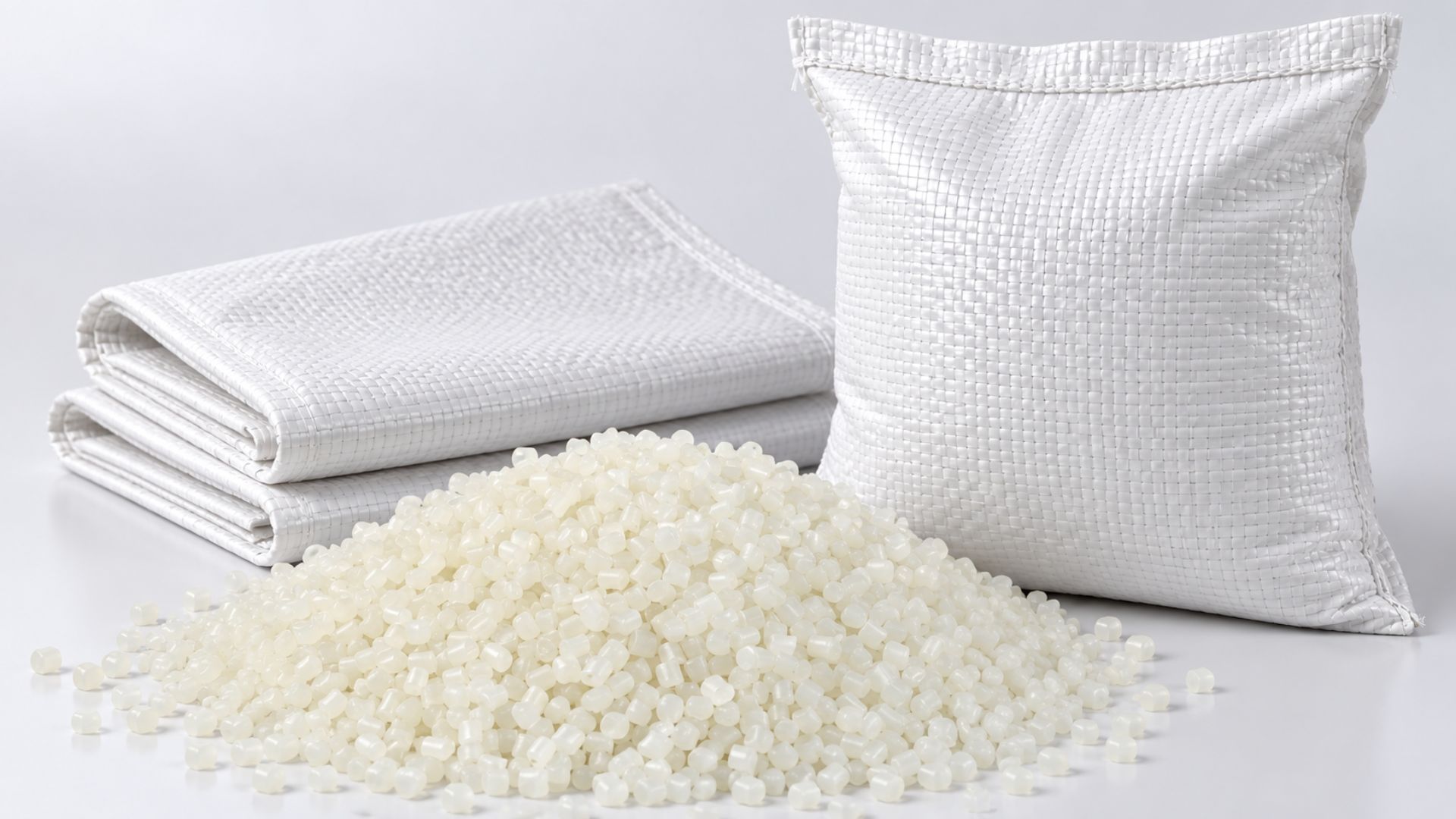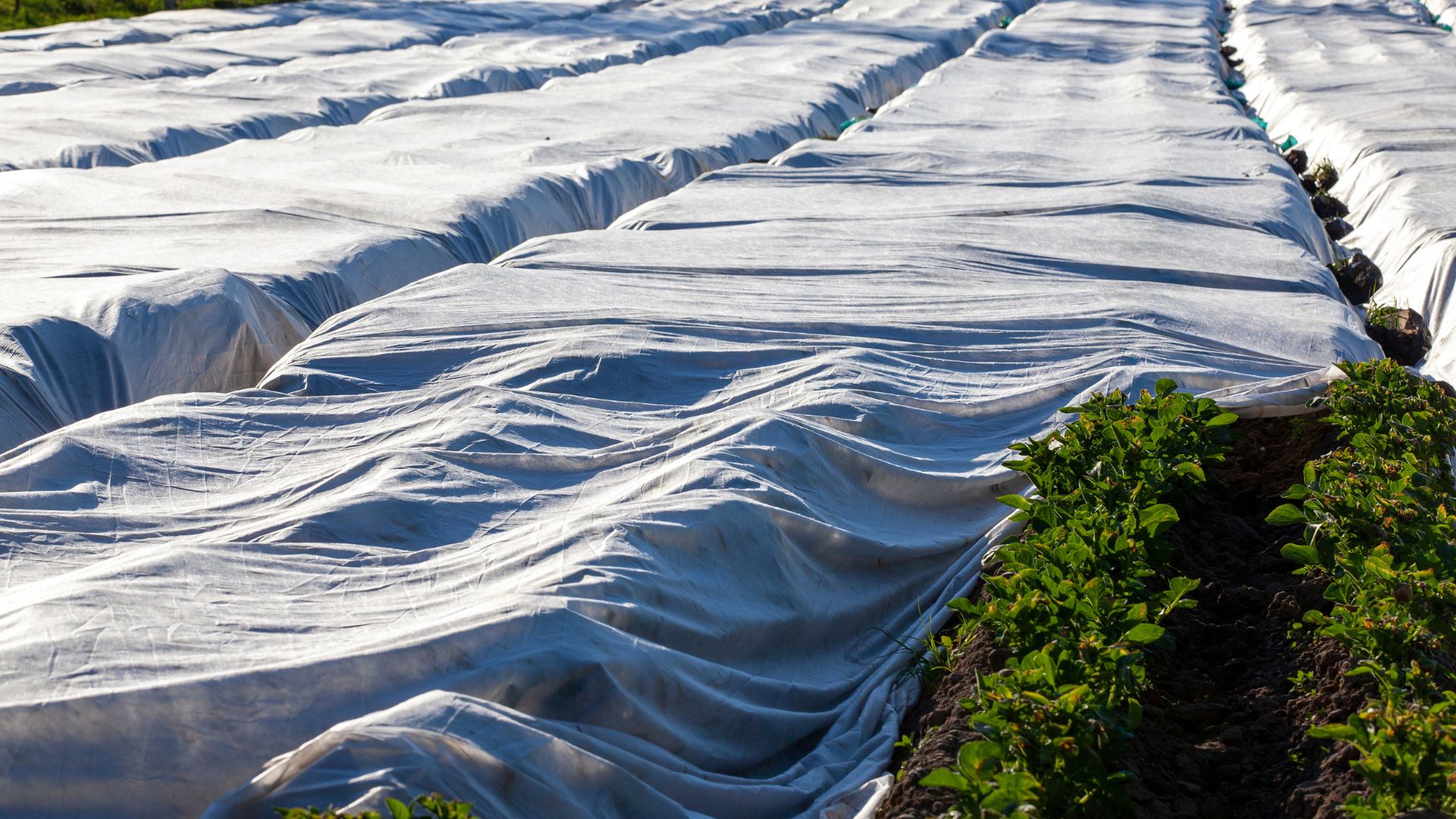
Color masterbatch for PP woven bags contributes to color consistency, processing performance, and the appearance of finished packaging. Its suitability depends on pigment dispersion, thermal stability, and compatibility with the complete PP formulation. This CVN PLASTICS blog explains how these properties influence tape production and provides a technical basis for understanding material selection and common processing problems.
What Is Color Masterbatch For PP Woven Bags?
Main Components And Their Functions
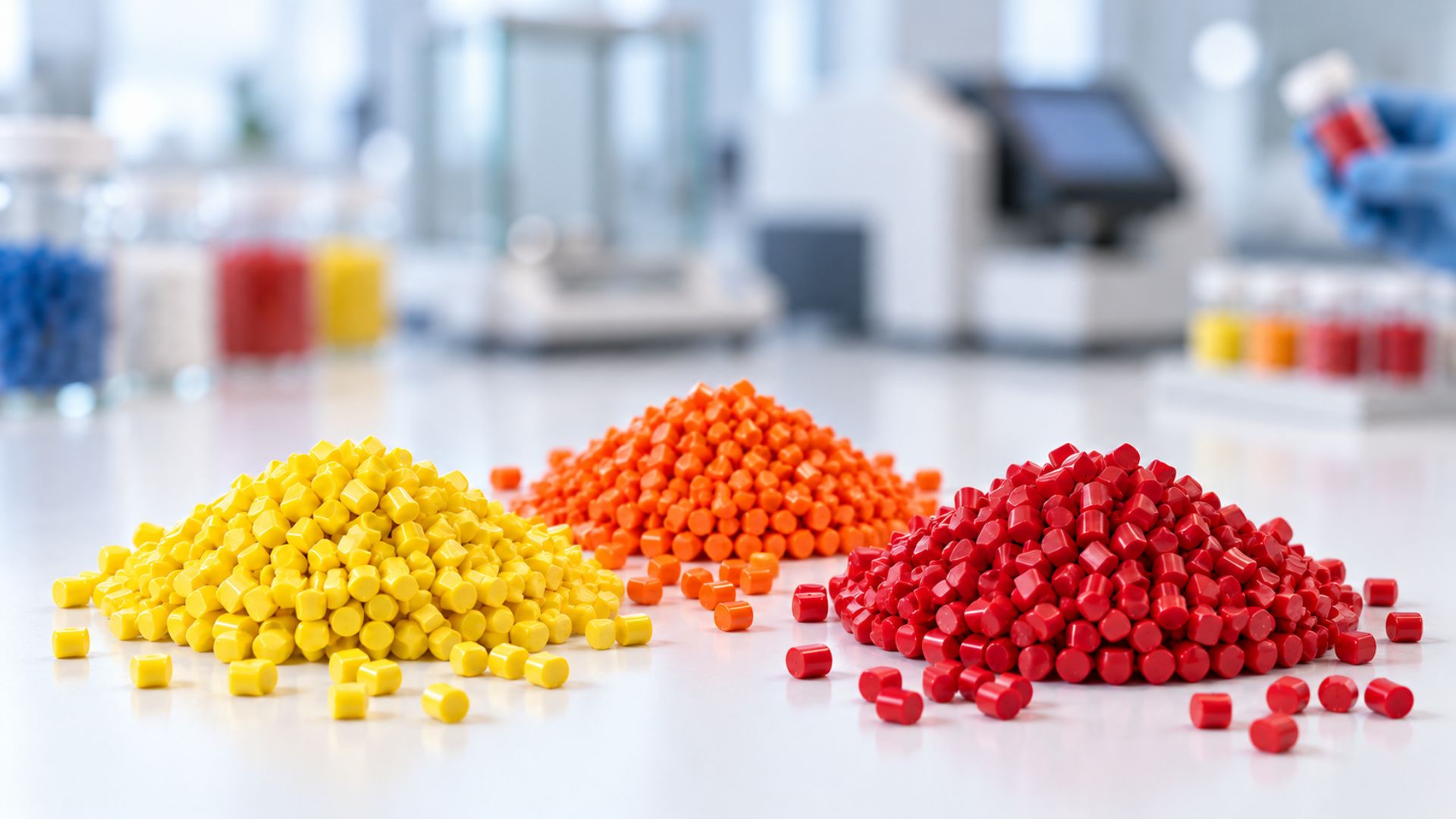
Color masterbatch is a concentrated mixture of pigments dispersed in a carrier resin. Its formulation may also contain dispersing agents and processing additives that support pigment wetting and incorporation into the polymer. Pigments determine the shade and contribute to opacity, while the carrier introduces them into the base material during extrusion.
The pigment content of the concentrate differs from that of the finished formulation. A masterbatch containing 40% pigment, used at 2% of the total formulation by weight, contributes 0.8% pigment to the final mixture. Consequently, the masterbatch addition rate alone does not describe the final pigment concentration or establish the resulting color.
How Color Masterbatch Enters The Production Process
Color masterbatch for PP woven bags is normally metered into the material feed together with PP resin and other formulation components. During extrusion, the concentrate melts and mixes with the base polymer. The resulting film is cooled, slit into narrow tapes, stretched under controlled heating, and wound before weaving.
The appearance of the finished fabric depends on more than the initial pigment mixture. Tape thickness, stretching conditions, and fabric construction influence how light interacts with the material. A laboratory sample can therefore provide an initial color reference, while representative tapes and woven fabric provide a closer indication of production appearance.
Color Masterbatch Versus Filler And Additive Masterbatch
Color, filler, and additive masterbatches serve different primary functions. Color masterbatch introduces pigments, filler masterbatch supplies mineral fillers such as calcium carbonate, and additive masterbatch provides functions such as UV stabilization or antistatic performance. A single production formulation may contain all three, making their combined effects relevant to processing and finished-bag quality.
Combination concentrates may incorporate both pigments and functional additives. Their suitability depends on whether the required color and additive concentrations can be achieved at the same addition rate. The presence of colorants alone does not establish that a concentrate provides adequate stabilization or other functional performance.
Why PP Tape Extrusion Requires Suitable Color Masterbatch
Dispersion During Melt Processing
Pigment distribution describes the uniformity of pigment placement throughout the polymer. Dispersion also concerns the separation of pigment agglomerates into smaller units. These characteristics are related, although a mixture with reasonably uniform overall coloration may still contain coarse pigment clusters that affect appearance or processing.
Most pigment dispersion should already be achieved during masterbatch manufacture. The tape extruder mainly dilutes and distributes the concentrate within the production formulation. The performance of color masterbatch for PP woven bags therefore depends partly on the quality of the concentrate before it reaches the tape extrusion line.
Higher extrusion temperatures do not necessarily eliminate poorly dispersed particles. Additional thermal exposure may instead cause discoloration or degradation of temperature-sensitive components. The relationship between mixing, temperature, and residence time determines whether processing adjustments improve material uniformity or create further difficulties.
Behavior During Tape Stretching
Stretching reduces the tape cross-section and produces orientation within the PP structure. Coarse particles or incompatible inclusions can create local stress concentrations as the surrounding material deforms. Their significance depends on particle size, tape dimensions, interfacial behavior, and stretching conditions.

The suitability of color masterbatch for PP woven bags consequently extends beyond its appearance in an unstretched film. Specks, local irregularities, or weak regions may become more apparent after stretching. Tape performance under representative production conditions provides stronger evidence of suitability than an initial color match alone.
Compatibility With The PP Formulation
Compatibility involves the carrier resin, base PP grade, filler content, recycled material, and additive package. Each component can influence melt behavior, pigment distribution, or the appearance of the final tape. A concentrate that performs consistently in one formulation may behave differently when these components change.
Recycled PP introduces additional variables because its background color, processing history, and composition may differ between supplies. Mineral fillers can also alter opacity and the perceived shade. The behavior of color masterbatch for PP woven bags therefore requires assessment within the complete production recipe.
Key Properties Of Color Masterbatch
Pigment Dispersion And Agglomerate Control
Microscopic examination, extruded tape inspection, and suitable filtration tests provide complementary information about dispersion quality. Microscopy can reveal coarse particles, while tape inspection shows whether defects remain visible after processing. Filtration measurements provide information about the material retained by a defined screen arrangement.
Filter pressure results depend on the test conditions, including throughput, temperature, and filter configuration. Comparisons are meaningful when these variables remain consistent. A pressure value without a defined procedure offers limited information about the suitability of a concentrate for a particular production line.
Color approval and dispersion approval address different properties. A sample may reproduce the target shade while containing occasional agglomerates that become significant during stretching. For color masterbatch for PP woven bags, acceptance criteria should therefore cover both appearance and the relevant processing performance.
Heat Stability Under Processing Conditions
Pigment heat stability describes its resistance to unacceptable color change during thermal exposure. The actual processing demand depends on melt temperature and exposure duration rather than on the temperature setting alone. Extended residence time during interruptions or material accumulation can increase the risk of discoloration.
A supplier’s stated processing temperature is most informative when the associated exposure conditions are available. Different test durations or polymer systems may produce different results. The thermal suitability of color masterbatch for PP woven bags consequently depends on how closely the supporting data represent the intended extrusion process.
Repeated processing can introduce further changes when production regrind forms part of the recipe. Discoloration may originate from pigments, polymer degradation, or other formulation components. Its interpretation requires consideration of the thermal history of the complete material rather than the concentrate in isolation.
Carrier Resin And Melt Flow Behavior
The carrier resin supports pigment incorporation during masterbatch manufacture and influences the concentrate’s behavior during dilution. A PP carrier is a common option for PP applications, although carrier identity alone does not establish compatibility. Carrier concentration and its effect on the final blend also influence performance.
Melt flow index describes flow under a specified temperature and load. It does not directly measure pigment dispersion, blend compatibility, or behavior throughout an extrusion line. Two materials with similar melt flow values can therefore differ in properties that affect mixing and tape production.
The selection of color masterbatch for PP woven bags requires a broader assessment than a comparison of melt flow values. Relevant information includes carrier composition, dispersion quality, intended addition rate, and production trial results. Together, these factors provide a more useful basis for evaluating suitability.
Color Strength And Batch Consistency
Color strength describes the coloring effect produced under defined comparison conditions. Pigment type, concentration, and dispersion all contribute to this property. Equal addition rates of two concentrates may therefore produce different shades, even when both products are intended for the same general application.

Batch consistency describes the reproducibility of the supplied concentrate over time. Consistent material quality supports shade control, while feeder accuracy and stable base materials remain equally relevant. Changes in filler whiteness or recycled resin color may alter the finished appearance without indicating a change in masterbatch quality.
How To Choose Color Masterbatch For PP Woven Bags
Define The Application
The intended use establishes the performance requirements of the packaging. Agricultural sacks, fertilizer bags, and industrial packaging can differ in storage duration, sunlight exposure, handling conditions, and appearance specifications. These differences determine which properties require particular attention during material assessment.
For outdoor packaging, color masterbatch for PP woven bags must be considered alongside the stabilization system. Pigment lightfastness concerns resistance to color change, whereas polymer stabilization concerns protection against degradation. A bag may retain its shade while losing mechanical performance, so these properties require separate evaluation.
Match The Production Conditions
Extrusion temperature, output, tape dimensions, stretching conditions, line speed, and filtration define the demands placed on the material. A concentrate suitable for one operating range may require further assessment when the tape becomes thinner or the stretching conditions change. Production information gives technical meaning to a supplier’s application recommendation.
A representative trial of color masterbatch for PP woven bags connects laboratory observations with actual manufacturing behavior. Relevant outcomes include shade consistency, visible defects, tape break frequency, and mechanical properties. These observations establish whether the selected material performs within the required operating conditions.
Evaluate The Complete Formulation
The trial formulation should represent the intended production recipe, including the actual PP grade, filler loading, recycled content, and additives. Results obtained only in natural virgin PP may not reflect the appearance or processing behavior of a filled or recycled formulation.
Controlled comparisons make differences between candidate concentrates easier to interpret. When several formulation components change simultaneously, the contribution of each becomes uncertain. A consistent base recipe provides a clearer basis for evaluating color masterbatch for PP woven bags and identifying the source of observed changes.
Review Technical Documentation
Technical documentation provides information about the recommended application, carrier system, addition guidance, and relevant material properties. Test methods and conditions determine how the reported values can be interpreted. Statements about dispersion or heat stability are more useful when supported by data relevant to tape extrusion.
Batch certificates can help monitor agreed properties across successive deliveries. Their value depends on whether the reported measurements relate to the manufacturer’s acceptance criteria. Laboratory documentation and production validation complement each other because neither describes every aspect of finished-bag performance.
Confirm Application-Specific Requirements
Some packaging applications require additional documentation or testing related to the intended contents and conditions of use. Suitability depends on the complete packaging construction, formulation, and exposure conditions. A general statement about a concentrate does not establish the suitability of every finished bag containing it.
Common Color And Processing Problems
Uneven Color And Shade Variation
Uneven coloration can arise from fluctuating dosing, incomplete mixing, material segregation, or inconsistent raw materials. The pattern of variation often provides useful evidence. Changes within a production run may indicate unstable feeding, while differences between runs may relate to formulation or raw material variation.
The investigation of color masterbatch for PP woven bags becomes more reliable when formulation records, feeder performance, and production samples are considered together. Samples collected at different processing stages can help establish where the variation first appears. This evidence narrows the likely causes without assuming that the concentrate is responsible.
Color Specks And Streaks
Specks may consist of pigment agglomerates, contaminants, foreign particles, or degraded polymer. Streaks may develop through incomplete mixing, residual material from a previous color, or equipment buildup. Similar visual defects can therefore originate from different mechanisms and require different corrective actions.
Defect frequency and timing can help distinguish these mechanisms. Problems concentrated around color changes may indicate residual material, while defects that increase during extended operation may suggest accumulation or degradation. Microscopic examination and controlled material comparisons provide further evidence about the origin of the particles.
Tape Breakage During Stretching
Tape breakage can involve contamination, coarse particles, excessive filler, uneven thickness, unsuitable stretching conditions, or equipment damage. Pigment agglomerates represent one possible contributor within this broader set of causes. Their presence becomes more significant when the particles coincide with repeated failure locations.
A controlled comparison helps establish whether color masterbatch for PP woven bags contributes to an increase in breakage. Consistent resin composition, tape dimensions, and stretching conditions make the results easier to interpret. Changes in several variables at once weaken the relationship between the observed failure and its suspected cause.
Filter Pressure Increase And Deposits
An increase in filter pressure indicates greater resistance to melt flow through the filtration system. This resistance may develop as pigment agglomerates, mineral particles, contaminants, or degraded polymer accumulate on the screen. Pressure trends are most useful for comparison when throughput, melt temperature, and filter configuration remain consistent.
Deposits at the die may result from the accumulation of formulation components or polymer degradation products during extrusion. Their formation depends on material composition and processing conditions, including temperature and residence time. The presence of deposits alone is insufficient to establish whether the concentrate is responsible.
The assessment of color masterbatch for PP woven bags therefore benefits from information about both the retained material and the operating history. Filtration behavior and deposit composition can help distinguish material-related problems from those associated with contamination or prolonged thermal exposure.
Fading During Storage Or Outdoor Use
Fading may occur when the pigment system lacks sufficient resistance to the actual light exposure. Polymer degradation can also change surface appearance and may occur alongside brittleness or strength loss. Color change and mechanical deterioration provide different information about the material’s response to its environment.
The outdoor suitability of color masterbatch for PP woven bags depends on the pigment system, stabilization package, and exposure conditions. Accelerated weathering tests can support comparisons between formulations. Their results do not directly establish a guaranteed outdoor lifetime unless a suitable relationship with actual service conditions has been demonstrated.
Conclusion
The suitability of color masterbatch for PP woven bags depends on its ability to deliver the required shade within the intended production process. Pigment dispersion, thermal stability, carrier compatibility, and stretching performance jointly influence the result. Evaluation within the complete formulation provides a sounder basis for approval than color matching alone.
A representative sample trial establishes how the concentrate behaves with the manufacturer’s actual PP grade, filler content, recycled material, and processing conditions. Manufacturers can contact CVN PLASTICS to discuss these requirements and request a sample with technical guidance for application-specific testing.
FAQs
1. Can The Same Color Masterbatch Be Used For Every PP Woven Bag?
No. Suitability depends on the formulation, tape production conditions, target shade, and intended use. Different applications may require separate validation.
2. Is A PP Carrier Required For PP Woven Bag Applications?
PP carrier is common, although other carrier systems may be suitable when compatibility and tape performance have been verified.
3. Can Color Masterbatch Affect Tape Strength?
Yes. Dispersion quality, composition, and addition rate can influence tape performance, together with the base formulation and stretching conditions.
3. Does Color Masterbatch Provide UV Protection?
Not automatically. UV protection depends on the formulation and its stabilization package; coloration alone does not confirm adequate protection.
4. What Determines The Correct Addition Rate?
The required rate depends on pigment concentration, color strength, target shade, tape thickness, and the complete formulation.
4. Why Can The Final Bag Color Differ From The Approved Sample?
Differences in formulation, thickness, stretching, fabric construction, and viewing conditions can change the perceived shade.