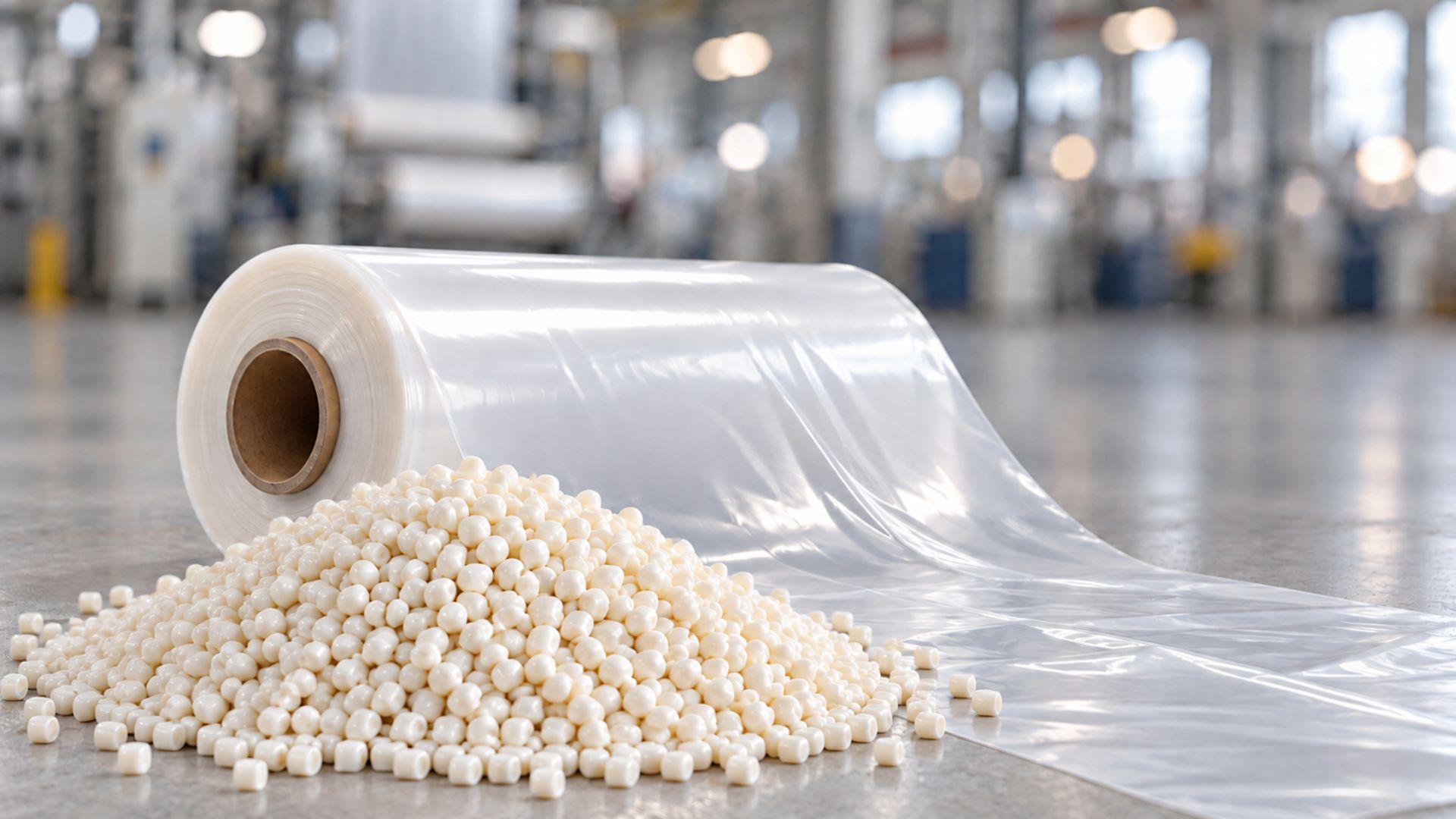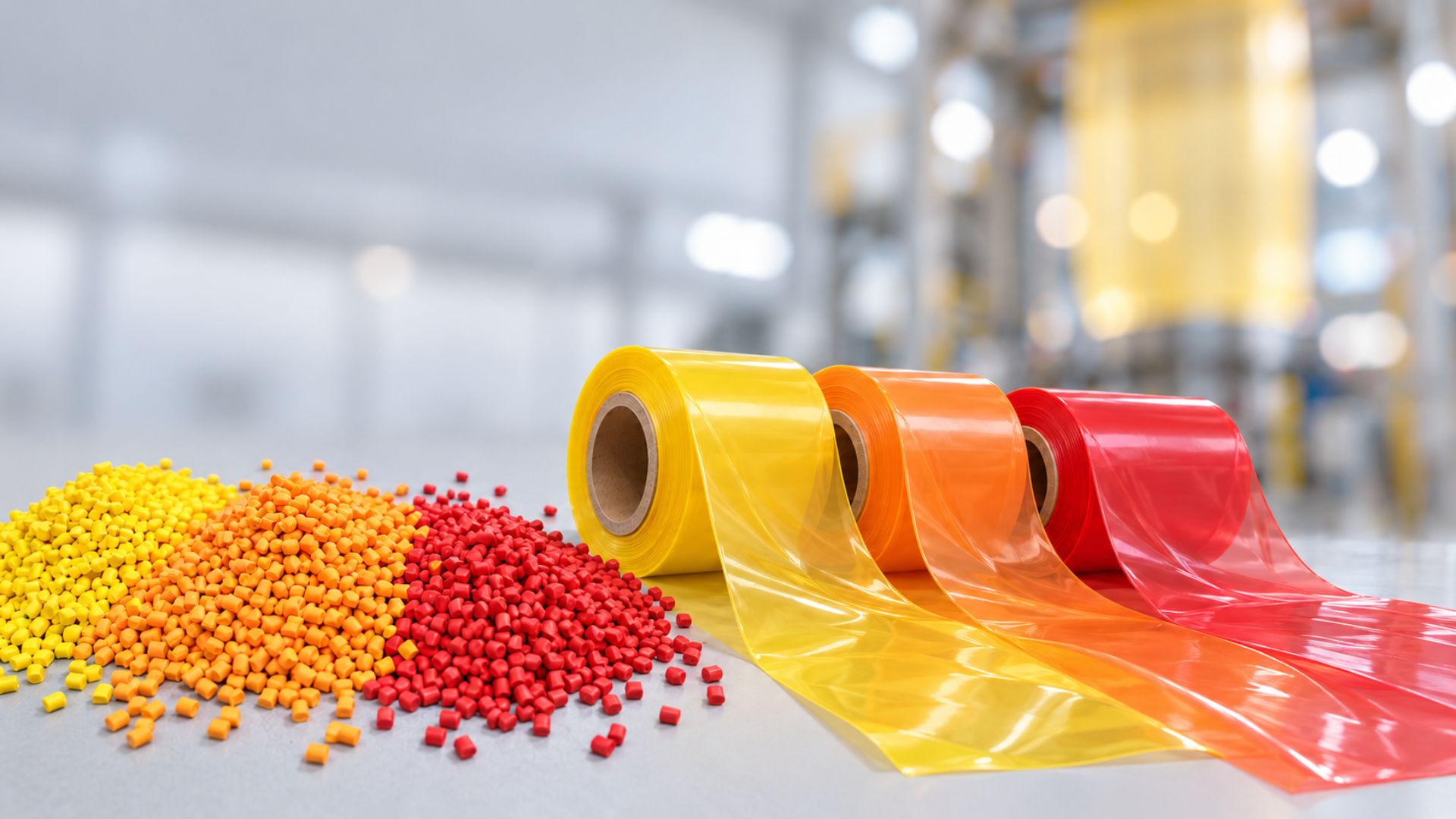
Masterbatch for industrial liner film helps manufacturers control color, surface behavior, processing, and selected functional properties. Its effectiveness depends on the base resin, film structure, additive concentration, and operating conditions. Read this CVN PLASTICS blog to understand the main masterbatch types, their effects on liner performance, and the criteria for selecting a suitable formulation.
What Is Industrial Liner Film?

Industrial liner film is a flexible plastic material placed inside bags, drums, containers, or other packaging systems. It separates the contents from the outer packaging and helps limit contamination, moisture exposure, and product leakage. Performance depends on the complete liner, including its film structure, thickness, seams, and closures.
Common Materials Used In Liner Film
Polyethylene is widely used in industrial liners. Low-density polyethylene (LDPE) offers flexibility and processing characteristics suitable for film production, while linear low-density polyethylene (LLDPE) contributes toughness and puncture resistance. Manufacturers can blend different polyethylene grades to balance processing behavior with the mechanical properties required by the application.
Industrial Liner Film Applications
Typical applications include liners for flexible intermediate bulk containers (FIBCs), industrial sacks, drums, and bulk transport containers. These liners may hold powders, granules, or other materials compatible with their construction. Selecting masterbatch for industrial liner film therefore begins with understanding the contents, filling method, storage conditions, and handling requirements.
Key Performance Requirements
A liner must withstand filling, transport, and discharge without unacceptable tearing, puncturing, or seal failure. Depending on the application, it may also require controlled friction, opacity, moisture resistance, or electrostatic properties. These requirements should be expressed as measurable specifications because a visually acceptable film may still fail during use.
Why Use Masterbatch In Industrial Liner Film?
Masterbatch contains concentrated pigments or functional additives dispersed in a carrier resin. It allows these ingredients to be introduced through controlled dosing during extrusion. Masterbatch for industrial liner film should be selected according to a defined performance target, with its contribution evaluated alongside the properties of the base polymer.
Achieving Consistent Color And Opacity
Color and opacity depend on pigment type, concentration, dispersion, and film thickness. A suitable masterbatch helps distribute pigment uniformly, reducing visible streaks and shade variation. Opacity should be evaluated at the actual production thickness because a formulation that appears opaque in a thick sample may provide insufficient coverage in thinner film.
Improving Film Processing And Handling
Different additives address different production problems. Processing aids can reduce specific extrusion defects, while slip and antiblock additives influence how finished film separates and moves during conversion. Their roles should be distinguished clearly, since improved extrusion behavior does not automatically produce the surface properties needed during winding, opening, or filling.
Adding Application-Specific Properties
Functional additives may provide electrostatic control or resistance to ultraviolet exposure when these properties are required. Masterbatch for industrial liner film should address the actual service conditions rather than include every available function. Additional ingredients can interact, making a simpler formulation easier to evaluate when several performance targets must be balanced.
Types Of Masterbatch For Industrial Liner Film

White Masterbatch
White masterbatch generally uses titanium dioxide to provide whiteness and opacity. Selection should consider pigment dispersion, carrier compatibility, and the required appearance at the specified film thickness. Higher loading should be justified through testing because pigment concentration alone does not establish whether the finished liner retains adequate strength and sealing performance.
Black Masterbatch
Black masterbatch commonly contains carbon black, which provides coloration and light screening. Performance depends on carbon black characteristics, dispersion, and final concentration. A black appearance alone does not demonstrate a defined outdoor service life, and ordinary black masterbatch should not be assumed to provide the electrical properties of a conductive formulation.
Color Masterbatch
Color masterbatch provides a defined shade for product identification or packaging differentiation. When choosing colored masterbatch for industrial liner film, manufacturers should assess consistency under controlled lighting and at the intended film thickness. Pigment heat stability, dispersion, and compatibility with the packaged contents also require consideration.
Slip And Antiblock Masterbatch
Slip additives reduce resistance to sliding, while antiblock additives help adjacent film surfaces separate. Conventional migrating slip agents develop their effect as they move toward the surface, so friction can change after extrusion. Antiblock particles reduce intimate surface contact, making the two functions complementary but technically distinct.
Antistatic Masterbatch
Antistatic masterbatch is intended to reduce electrostatic charge accumulation or promote charge dissipation. Performance depends on the additive mechanism, concentration, film construction, and environmental conditions. Antistatic masterbatch for industrial liner film must be assessed against the required electrical behavior; the product name alone cannot establish suitability for a particular handling environment.
UV Stabilizer Masterbatch
UV stabilizer masterbatch helps limit polymer degradation caused by ultraviolet exposure. Its selection depends on exposure duration, climate, film thickness, pigmentation, and the complete formulation. The target should be retention of relevant properties after exposure, since an unchanged appearance does not necessarily mean the film has retained its original mechanical performance.
Processing Aid Masterbatch
Polymer processing aids can reduce melt fracture, an extrusion defect that produces surface roughness as molten polymer exits the die. Their effectiveness depends on the resin and operating conditions. Processing aid masterbatch for industrial liner film should therefore be evaluated through controlled extrusion trials rather than treated as a universal solution to film defects.
How Masterbatch Affects Liner Film Performance
Mechanical Strength And Film Integrity
Mechanical performance depends primarily on resin selection, film thickness, structure, and processing history. Masterbatch can affect this balance through its carrier resin, additive loading, and dispersion quality. Poorly dispersed particles or incompatible components may create local weaknesses, making finished-film testing essential when a formulation or dosage changes.
Surface Friction And Blocking
Film friction influences winding, conversion, insertion, and handling, while blocking describes adhesion between contacting film surfaces. Excessively low friction may be as undesirable as excessive resistance, depending on the operation. Evaluating masterbatch for industrial liner film therefore requires a target friction range and a separate assessment of film opening behavior.
Heat Sealing Performance
Seal performance depends on the sealant resin, temperature, pressure, dwell time, and surface condition. Additives present at the sealing interface can influence the result, so the complete formulation requires validation. Tests should establish a workable sealing range rather than rely on a single strong seal produced under one laboratory condition.
Appearance And Dispersion Quality
Uniform appearance can indicate consistent pigment distribution, but visual assessment alone cannot confirm dispersion quality. Small agglomerates, gels, or contaminants may become significant defects in thin film. Quality evaluation should examine both overall color uniformity and localized imperfections, particularly where defects could initiate tearing or compromise liner integrity.
How To Choose The Right Masterbatch
Compatibility With The Base Resin
The carrier resin must disperse adequately within the selected polymer under actual processing conditions. Compatibility should be assessed alongside melt behavior, thermal stability, and the intended layer structure. Selecting masterbatch for industrial liner film involves matching the complete concentrate to the resin system, rather than relying only on a general polyethylene designation.
Film Thickness And Production Conditions
Film thickness influences opacity, defect visibility, and the practical effect of dispersed particles. Extruder design, mixing efficiency, output, cooling, and drawdown also affect the finished material. Trials should reproduce normal production conditions because results obtained from thick laboratory specimens may not represent thin film manufactured at commercial output.
Required Properties And End-Use Conditions
Specifications should reflect how the liner will be filled, stored, transported, and emptied. Product shape, filling temperature, storage humidity, and outdoor exposure can change the relevant performance priorities. A formulation suitable for smooth pellets under indoor storage may require further evaluation before use with abrasive powders or prolonged sunlight exposure.
Recommended Dosage And Trial Validation
Dosage depends on the concentrate’s active content and the required final concentration. For example, adding a masterbatch containing 10% active ingredient at 2% of the final blend produces 0.2% active ingredient. Dosage trials for masterbatch for industrial liner film should compare measurable results while also accounting for additives already present in the resin.
Applicable Regulatory And Customer Requirements
Requirements depend on the packaged material, intended contact conditions, destination market, and customer specification. Supplier documentation should identify the relevant grade and conditions of use. A compliance statement for one masterbatch does not independently establish compliance of the finished liner, which also contains other materials and undergoes further processing.
Quality Testing For Industrial Liner Film
Thickness Uniformity And Visual Inspection
Thickness should be checked across the film width and along the roll to identify variation and localized thin areas. Visual inspection should examine streaks, holes, gels, pigment specks, and contamination. Comparing these results before and after introducing masterbatch for industrial liner film helps identify formulation-related changes without overlooking normal process variation.
Tensile, Tear, And Puncture Testing
Tensile testing measures properties such as strength and elongation, while tear and puncture tests assess different failure mechanisms. Results should be compared at equivalent thickness and conditioning, with film direction recorded where relevant. ASTM D882 provides a recognized method for determining tensile properties of thin plastic films and sheeting.
Coefficient Of Friction And Blocking Tests
Coefficient of friction testing evaluates resistance to sliding between defined surfaces. Blocking tests evaluate the force needed to separate contacting film layers, so the measurements are not interchangeable. Where migrating slip additives are used, testing at defined intervals after extrusion helps capture changes in surface behavior during storage and conversion.
Seal Strength And Application-Specific Testing
Seal evaluation should consider strength, failure mode, and integrity under representative operating conditions. Additional testing may address leakage, electrical properties, weathering, or interaction with the contents. Validating masterbatch for industrial liner film requires evidence from the finished liner because film specimens alone cannot represent every seam, closure, and handling condition.
Conclusion
Selecting masterbatch for industrial liner film requires a clear connection between the required function, material compatibility, and finished-liner performance. Define the resin system, thickness, handling conditions, and acceptance criteria before conducting trials. This approach makes it easier to distinguish a useful formulation change from an improvement that appears only under limited test conditions.
For further explanations of polymer additives, film processing, and material selection, read the CVN PLASTICS blog. Use these technical principles alongside supplier documentation and production data to evaluate formulations systematically and develop liners that meet their intended application requirements.
FAQs
1. Which Masterbatch Is Suitable For PE Liner Film?
Choose based on the required function, PE grade, and processing conditions.
2. How Much Masterbatch Should Be Added?
Follow the supplier’s recommended dosage and validate it through production trials.
3. Can Multiple Masterbatches Be Used Together?
Yes, if compatible. Test the combined formulation for film performance.
4. Does Antistatic Masterbatch Make A Liner Suitable For Hazardous Areas?
No. Safety depends on the electrical properties and certification of the complete packaging system.
5. Can Masterbatch Improve Moisture Barrier Performance?
Only specific formulations may help. Verify performance through water vapor transmission testing.